




Issue 7: May 2026: Wandering to Find My Place
Theme: Through small rituals of friendship and quiet acts of endurance, a displaced and “othered” self slowly reclaims dignity, belonging, and inner resilience in a place that once felt foreign.
Within our journey lie valuable insights into the ways our life experiences shape who we are and how we serve others. At its core, human experiences remind us that our past is not separate from our professional lives; instead, it informs us of the way we listen, empathize, and design meaningful experiences.
By reflecting on lived moments, we uncover timeless truths that guide us toward better human connections, stronger organizations, and more impactful service.
Together, we will explore how personal history becomes professional wisdom—and how those reflections can empower us to elevate CX in every interaction.
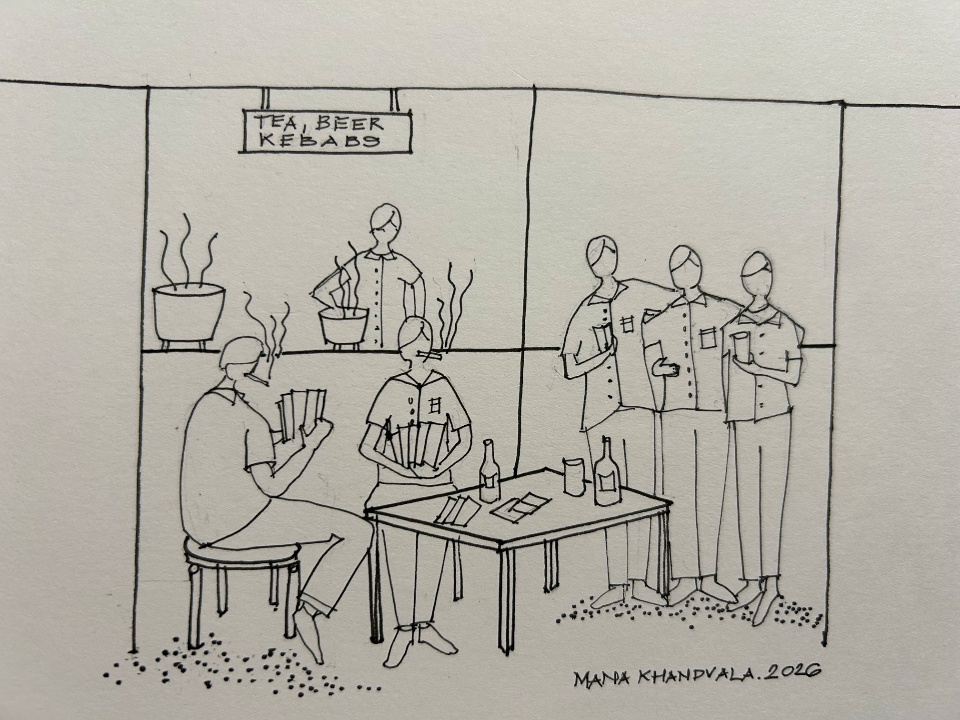
In Lahore, my nights were shaped by ritual: endless card games of Teen Putti, the clink of glasses, and late walks to tikka stalls where the smell of grilled meat wrapped itself around our laughter. What began as a diversion became my lifeline, transforming a strange city into a place of belonging through the unlikely brotherhood I formed with Safiullah, Tariq, Tasneem, Tariq B, and others.
Behind the camaraderie, I wrestled with uncertainty: scarce work, reliance on fragile family remittances, and the unspoken weight of my debts to those who supported me. Nights alone in my small room, with only the radio and distant world events for company, magnified my loneliness and sense of invisibility in a country that was not my own.
Having lived through the brutal “othering” of apartheid, I now faced a quieter exile where no one actively denied my dignity, yet few truly knew I existed. I often walked past psychologists’ offices, yearning to ask for help, but shame, lack of money, and lack of courage kept me outside their doors.
CX insights from the narrative
These insights translate the personal narrative into customer/employee experience principles.
| CX Theme | Insight from the Chapter | CX Application |
|---|---|---|
| Belonging and community | Informal card games and tikka rituals turned a foreign city into a place that felt like home. | Design experiences that foster micro-communities (peer groups, rituals, forums) so people feel “seen” and anchored to your brand. |
| Rituals as experience glue | Repeated social rituals stitched together camaraderie and emotional safety. | Create recurring touchpoints (onboarding check-ins, user groups, recurring events) that build trust over time, not just transactions. |
| Emotional lifelines | Friends became a lifeline during displacement and uncertainty. | Position CX and EX programs as emotional support systems — proactive outreach, empathy, and human help during moments of uncertainty. |
| Invisible pain | Loneliness and “invisibility” persisted despite surface-level dignity. | Look beyond basic satisfaction; measure and address hidden emotional needs (isolation, anxiety, feeling unheard) in VoC/VoE. |
| Barriers to asking for help | The narrator wanted psychological help but felt blocked by money and shame. | Remove friction and stigma from seeking support (clear pathways, anonymous options, nonjudgmental messaging, easy escalation). |
| Financial precarity | Survival depended on uncertain remittances and created constant stress. | Recognize that financial vulnerability shapes experience; offer flexible policies, transparent fees, and empathetic collections. |
| Resilience and dignity | Resilience meant living with pain while protecting dignity and self-worth. | Treat customers and employees as agents, not victims; co-create solutions and preserve dignity during complaints and service failures. |
| Past trauma in present experience | Apartheid-era “othering” colored how the narrator experienced exile and belonging. | Understand that historical and social context shapes today’s CX; avoid one-size-fits-all journeys, especially for marginalized groups. |
| Small moments, big impact | Simple acts — banter, shared meals, radio companionship — had outsized emotional impact. | Design “small magic moments” (warm greetings, personal notes, tailored nudges) that cost little but transform perceived experience. |
| Self-story as transformation | The narrator reframes pain as part of an unothering journey toward freedom. | Help customers and employees see themselves as heroes of their own journey; frame experiences as progress, not just problem resolution. |
Belonging and community
Informal card games and tikka rituals turned a foreign city into a place that felt like home.
Design experiences that foster micro-communities (peer groups, rituals, forums) so people feel “seen” and anchored to your brand.
Rituals as experience glue
Repeated social rituals stitched together camaraderie and emotional safety.
Create recurring touchpoints (onboarding check-ins, user groups, recurring events) that build trust over time, not just transactions.
Emotional lifelines
Friends became a lifeline during displacement and uncertainty.
Position CX and EX programs as emotional support systems — proactive outreach, empathy, and human help during moments of uncertainty.
Invisible pain
Loneliness and “invisibility” persisted despite surface-level dignity.
Look beyond basic satisfaction; measure and address hidden emotional needs (isolation, anxiety, feeling unheard) in VoC/VoE.
Barriers to asking for help
The narrator wanted psychological help but felt blocked by money and shame.
Remove friction and stigma from seeking support (clear pathways, anonymous options, nonjudgmental messaging, easy escalation).
Financial precarity
Survival depended on uncertain remittances and created constant stress.
Recognize that financial vulnerability shapes experience; offer flexible policies, transparent fees, and empathetic collections.
Resilience and dignity
Resilience meant living with pain while protecting dignity and self-worth.
Treat customers and employees as agents, not victims; co-create solutions and preserve dignity during complaints and service failures.
Past trauma in present experience
Apartheid-era “othering” colored how the narrator experienced exile and belonging.
Understand that historical and social context shapes today’s CX; avoid one-size-fits-all journeys, especially for marginalized groups.
Small moments, big impact
Simple acts — banter, shared meals, radio companionship — had outsized emotional impact.
Design “small magic moments” (warm greetings, personal notes, tailored nudges) that cost little but transform perceived experience.
Self-story as transformation
The narrator reframes pain as part of an unothering journey toward freedom.
Help customers and employees see themselves as heroes of their own journey; frame experiences as progress, not just problem resolution.
Looking back, I see those card and radio nights as part of my unothering journey—teaching me that resilience is not the absence of pain, but the ability to live with it without surrender. In the small rituals of friendship and the stubborn will to endure, I began to reclaim my sense of worth and belonging from the shadow of apartheid.
Leadership Takeaways
See and reduce “invisibility.”
Leaders must recognize that many team members and customers feel invisible even when no one is overtly mistreating them. Creating deliberate practices of recognition—public acknowledgment, active listening, and inclusive rituals—can counteract this quiet exile.
Build rituals, not just processes
The card games and tikka outings worked as stabilizing rituals, not mere entertainment. Leaders can similarly create recurring, human-centered rituals (story circles, learning lunches, “wins and worries” huddles) that build psychological safety and belonging.
Lower the cost of asking for help
The narrator’s reluctance to seek psychological support shows how stigma, money, and fear block people from raising their hand. Leaders should normalize vulnerability, make support visible and accessible, and remove financial or social penalties for seeking help.
Treat resilience as relational, not individual
Resilience emerged from a web of friendships and small comforts, not sheer willpower. Leaders who want resilient organizations should invest in community, mentoring, and peer networks rather than merely exhorting people to “be resilient.”
Honor hidden burdens
Financial uncertainty and family obligation weighed heavily, even as the narrator appeared outwardly functional. Leaders should assume their people and customers are carrying unseen loads and design policies, workloads, and communications with that compassion in mind.
Closing Thought
This chapter shows that the journey from “othered” to “unothered” is not dramatic or linear; it happens slowly through friendships, rituals, and a steady refusal to surrender one’s dignity. For leaders and CX practitioners, the message is clear: the most transformative experiences often arise not from grand strategies, but from consistently humanizing the small moments where people feel alone, uncertain, or unseen.
* Some content/design elements in this HXI were assisted by AI tools, with final editing by the CXU team.
Biography of Mohamed Latib
Mohamed Latib, Ph.D., established CX University, leveraging his extensive background as a customer experience (CX) specialist and his academic tenure, including roles as a professor, Dean, and Vice President at various distinguished institutions, spanning over 35 years. Latib has been a pioneer in adult
continuing education globally, including in the United States, Europe, Asia, and Latin America. With a career in CX spanning over three decades, Latib co-founded a previous company where he deployed customer feedback systems for notable brands such as Kohl’s, Fossil, TransUnion, The World Bank, Project Management Institute, Citibank, and more.
Under his leadership, CX University has influenced the CX discipline globally and was recognized by CXPA in 2022 with the Impact Award. CXU is also recognized as among the best CX certification programs in the USA. Latib has spearheaded several cultural transformation efforts and contributed to developing senior executives at companies like Air Products, Pennsylvania Power & Light, Siemens, Smithfield Meats, Dominion Textiles, Unisys, and others.
An accomplished author, he has written numerous articles and papers. He earned an MS in Psychology, an MBA, and a Ph.D. in Business Administration focusing on Organizational Behavior, Human Resources, and Strategy from the Fox School of Business and Management at Temple University.