


During the second week of January each year, The Jacob K. Javitz Center in New York is home to the National Retail Federation’s annual retail show. It’s called the BIG Show because, well, it’s big. Hundreds of vendors to the retail trade and 30k+ delegates paraded through this year’s ‘store of stores’ in 280,000 square feet of exhibit space.
This year, there was no single big theme. But, there were many little ones all vying for attendees’ attention.
Most vendors I spoke with at this year’s show justified the existence of their product(s) with claims about how it improved the customer experience, saved money, and made business more efficient and/or more profitable.
The winners? According to the RIS 13th Annual Store Systems Study [2016], the top two store systems that can achieve these gains in customer experience and bottom-line gains are CRM/Loyalty and Mobile for Associates. But just purchasing and installing these products won’t automatically make things better. Retailers must adapt how they work and think to accommodate new customer needs and the new capabilities technology brings.
Compared to my last few visits to NRF, I picked up on two themes in all the trade show noise that may help. Here’s the first one. The second one will be on next week’s blog.
Theme #1
Retailers are acting on the notion that customers’ needs are different from their own. (Finally 😉 For decades everyone agreed to the notion that it was the retailer’s job to buy the right items in the right quantities and make them available at the right place, time and price. Interactions between customers and decision-makers at the home office were practically impossible, so retailers had to act independently, often planning and ordering seasons ahead of customer demand. Fast forward to 2016. Now, sensing what customers want happens in faster cycles, sometimes in near real time. Here are some examples of the tools, services, and possibilities:
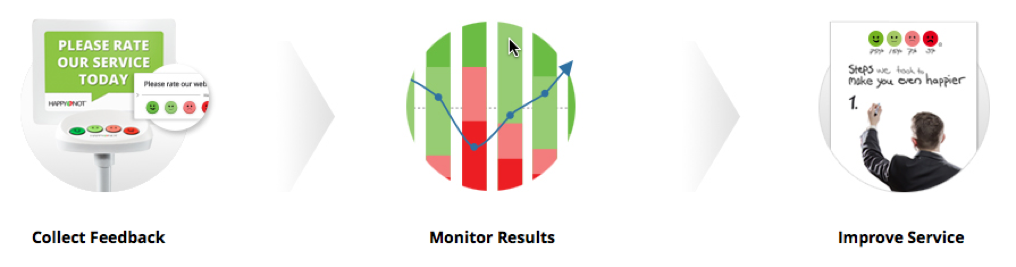
Happy-or-Not leases retailers an inexpensive and simple device that collects answers from customers to a single question (like “Was checkout fast enough today?” or “Did you find what you were looking for?”). Results are transmitted nightly and automatically through the cellular network. Savvy retailers can learn the very next day what customers think or feel about just about anything. Like how a promotion, display, the check-in/-out process, or the speed of service are performing. Compare that with mall intercept surveys that took weeks to plan and months to collate results for just 10 years ago.
Cognitec uses presence detection and expression reading (both through video analytics) to help retailers answer practical questions like these:
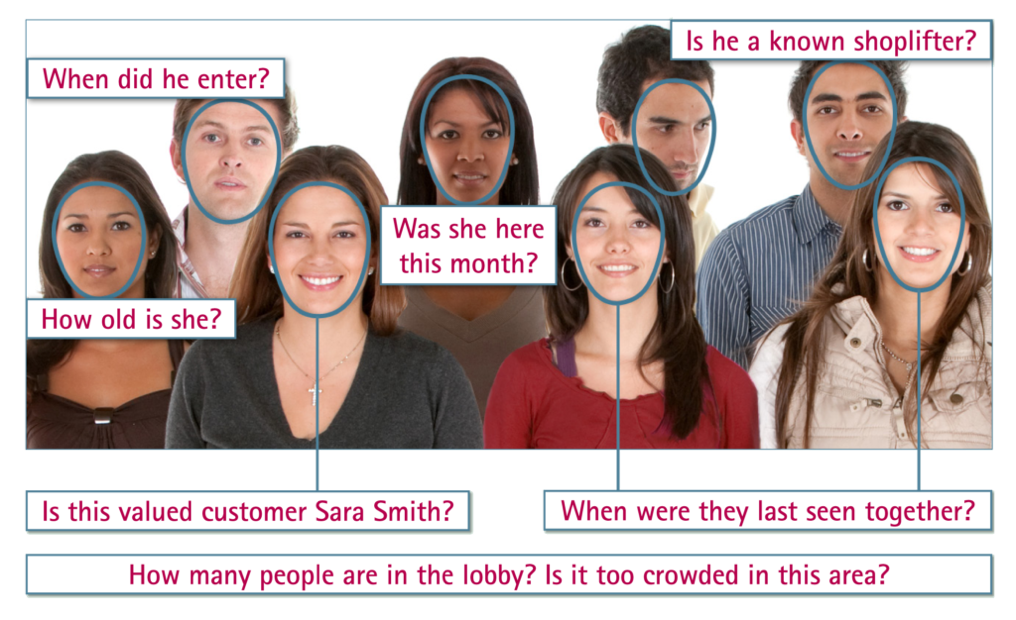
Smarter retailers are using this kind of information to provide better service, understand their customer and their shopping patterns better, to improve the design of services and the stores themselves, and to reduce theft.
Cognitec’s sophisticated, cloud-based software can ‘see’ things at the scale of an entire business that humans can’t. One of the more popular uses is letting store associates know when a retailer’s best customers have entered the store. This is done with the customer’s permission, of course, and is usually part of being a loyalty club member. Say, for example, Mrs. Smith enters and she has an order to pick up. Cognitec’s software (connected to store communications and the order management system) can alert a staff member to:
- head to the back room to pick up the order (to save Mrs. Smith some time)
• show a picture of Mrs. Smith (so she can be greeted by name)
• let the store associate know what else Mrs. Smith is interested in and where the conversation left off last time
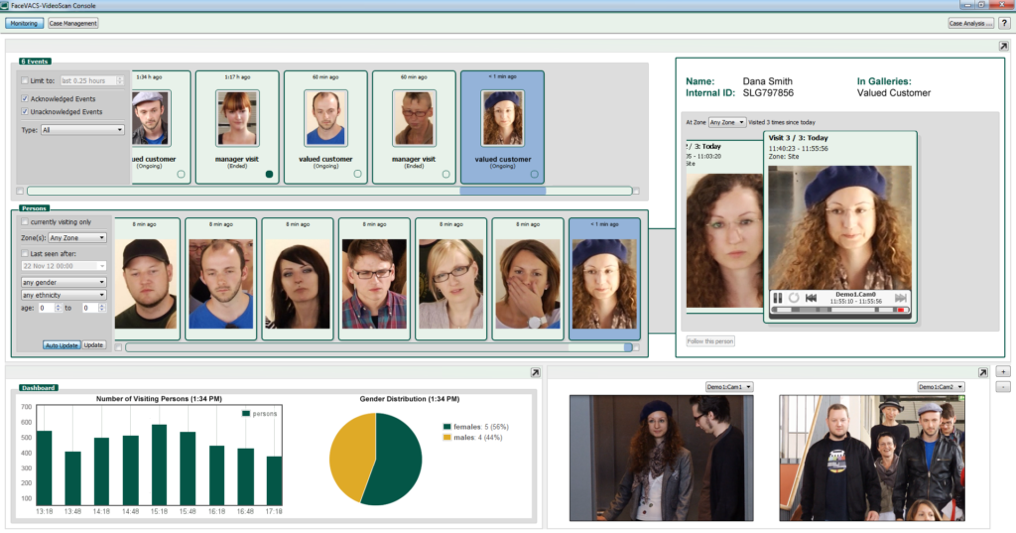
When a customer’s own information is used to serve them better, it’s not odd, it’s just better customer service. Ike Godsey, the shopkeep (and postmaster) on Walton’s Mountain knew everyone by name, knew what they wanted and when they normally stopped by. He’d have their orders ready for them. Now, we have software to do what Ike used to do.
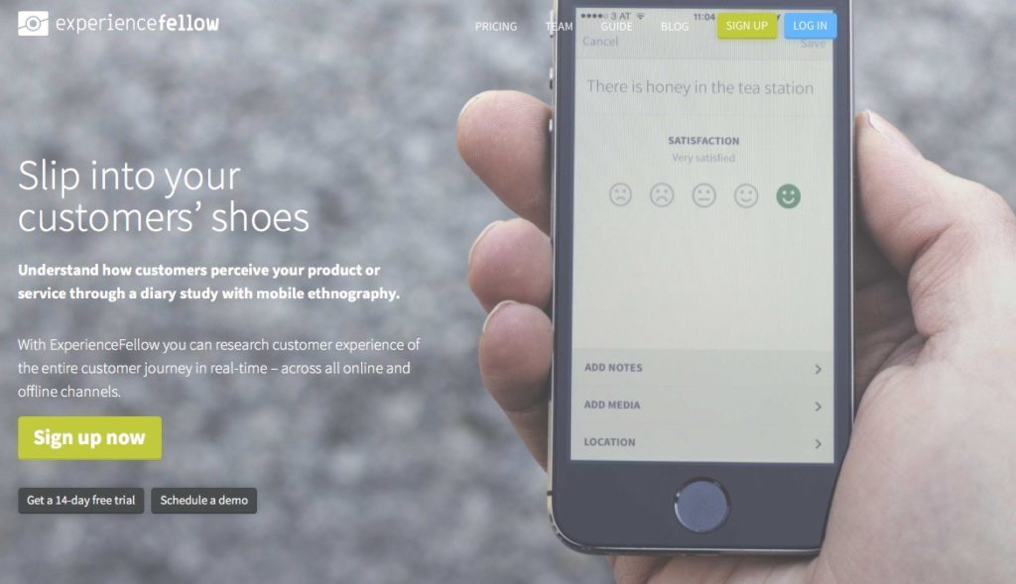
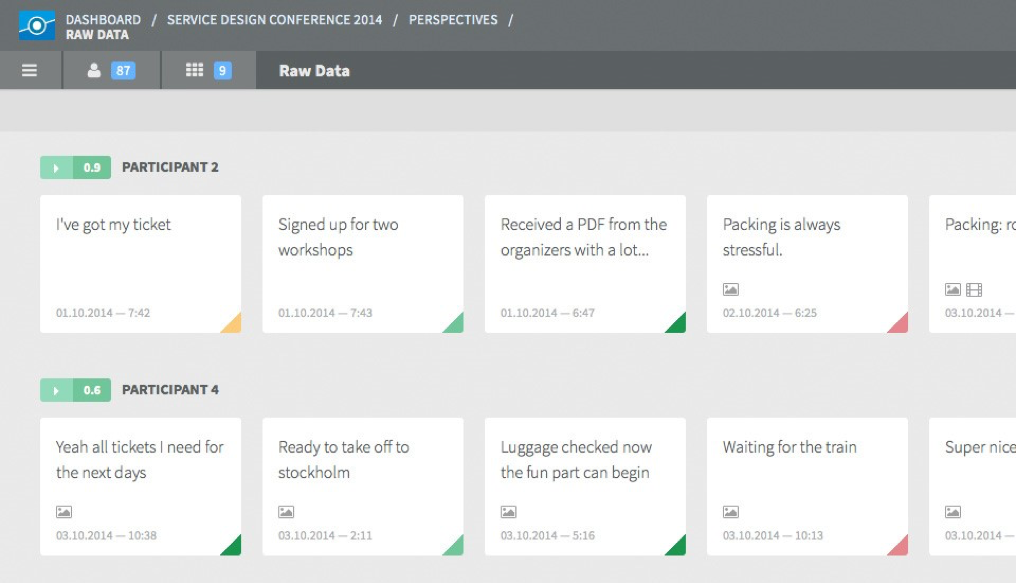
MyExperienceFellow lets you build a diary of customers’ actual journeys using a simple mobile interface like this. Customers (not necessarily researchers) simply record how they are feeling and what they are doing when they are with the company under study.
The software adds time, location, distance, etc. automatically and collates the information for several to several hundred customers into a visual ‘trail’ (or journey) so the business, service, and experience designers can get a real view of what experiences the customers are having and how they feel about it. This information helps make the business work better.